
A Proud Canadian Company 
Preventing Pigeon Infestations
- by Toodaloo
- July 8, 2019
Preventing Pigeon Infestations
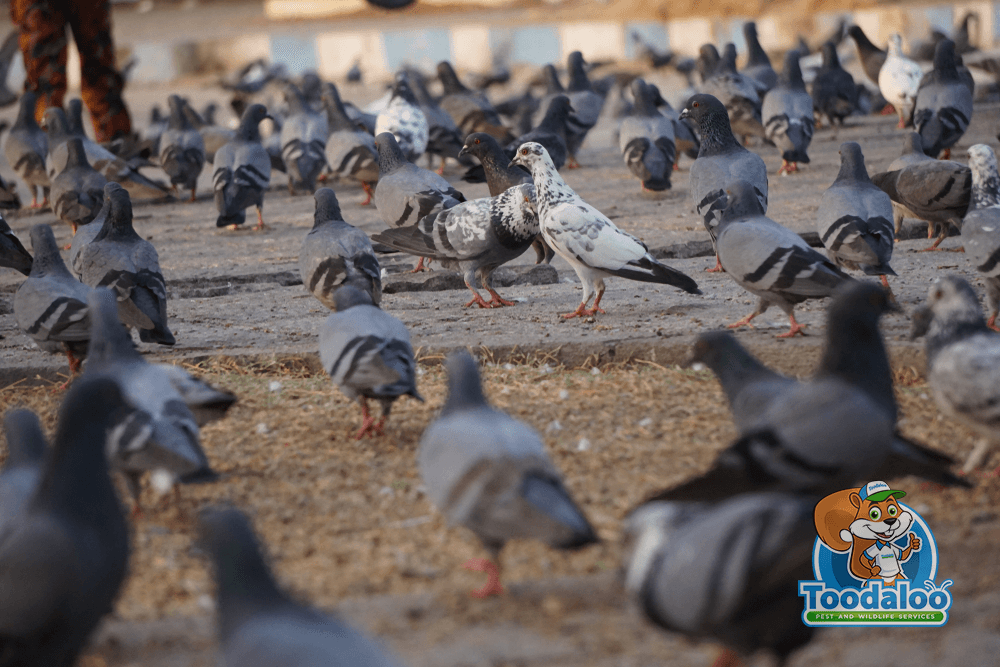
Birds might not be as visible during colder months but for pigeons, summer is their time to shine! What might start out as a peaceful picnic for you can end up in a swarm of uninvited guests. It is bad enough when these pests stop in but there is nothing worse than when they choose to stick around. A professional pigeon control service gets rid of current populations and uses top of the line techniques to prevent future infestations.
What Makes Pigeons Problematic
It is common to run for cover when birds come swooping down but this still isn’t the scariest thing that these pests can do. Every day, pigeons are leaving their mark on Canadian homes and businesses. These calling cards come in the form of nests, loud cooing and, of course, the dreaded dropping. Droppings are ugly but they are also destructive. Pigeon poop is highly acidic, so much so that it is corrosive. Letting this material sit on surfaces can ruin paint and protective coatings. You might be able to scrub these materials away here and there but persistent populations are impossible to keep up with. Don’t wait for costly consequences when you can call in professional help instead.
The Toodaloo Technique
You might be able to shoo away a bird here or there but there is just no way to keep up with these intruders. Instead of running yourself ragged, call Toodaloo to treat the infestation that you have and prevent pests from coming back.
There are plenty of reasons that pigeons might be attracted to your property, but access to food is often a game changer. A covered space like a garage, patio or even balcony provides shelter from the elements, combined with a nearby food source makes for a perfect nesting ground. In order to keep these spaces free of birds, our experts have partnered with Bird-B-Gone to outfit spaces in the most effective way possible. Spikes and netting are common practice for tough to reach spaces. If pigeons can’t land, they will just move on to the next space. If you do not like the look of these techniques, visual aids, minor electrical currents and even sounds can help keep your birds at bay.